
Bleeding Gums While Brushing: Early Signs You Shouldn’t Ignore
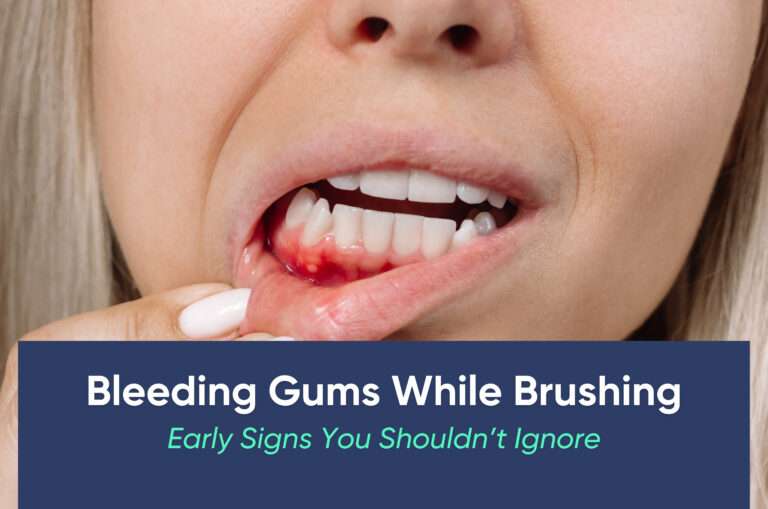
Bleeding Gums While Brushing: Early Signs You Shouldn’t Ignore
Seeing blood while brushing your teeth is often brushed aside as a minor issue. Many people assume it is caused by brushing too hard or using a new toothbrush. In reality, bleeding gums are rarely normal and are often the body’s early signal that something is not right with oral health.
Gum tissues are designed to be firm and resilient. When they bleed repeatedly during brushing or flossing, it usually indicates inflammation or infection beneath the surface. Left unaddressed, this can progress silently and lead to more serious dental and health complications.
Understanding why gums bleed—and when the issue requires professional evaluation—can help prevent long-term damage.
Are Bleeding Gums Ever Normal?
Healthy gums do not bleed during routine oral hygiene. Occasional bleeding may occur if flossing is introduced after a long gap, but persistent or recurring bleeding is not normal.
Bleeding is a sign that gum tissues are inflamed, weakened, or infected. The earlier this is identified, the easier it is to manage.
Common Reasons Gums Bleed While Brushing
1. Plaque Accumulation Along the Gumline
One of the most common causes of bleeding gums is plaque buildup. Plaque is a sticky film of bacteria that forms naturally on teeth. When it collects near the gumline and is not removed effectively, it irritates the surrounding tissues.
This irritation triggers inflammation, making the gums red, tender, and prone to bleeding—especially during brushing.
2. Gingivitis: The Early Stage of Gum Disease
Gingivitis is a mild but significant form of gum disease. It develops when plaque remains on teeth for extended periods and begins to affect the gums.
Typical signs include:
- Bleeding during brushing or flossing
- Red or swollen gums
- Persistent bad breath
At this stage, gum disease is reversible with proper cleaning and improved oral hygiene habits. However, ignoring gingivitis allows it to progress further.
3. Improper Brushing Technique
Brushing aggressively or using a hard-bristled toothbrush can injure delicate gum tissue. This does not strengthen gums; instead, it causes micro-trauma that leads to bleeding and, over time, gum recession.
Effective brushing is gentle, controlled, and focused on cleaning—not scrubbing.
4. Tartar (Hardened Plaque) Formation
When plaque is not removed regularly, it hardens into tartar. Unlike plaque, tartar cannot be removed with a toothbrush or floss.
Tartar creates a rough surface where bacteria thrive, keeping gums in a constant state of irritation. This is why bleeding often continues even when brushing habits improve.
5. Progression to Periodontitis
If gingivitis remains untreated, it can develop into periodontitis—a more serious form of gum disease that affects the bone supporting the teeth.
At this stage, symptoms may include:
- Frequent or heavy gum bleeding
- Gum recession
- Loose teeth
- Discomfort while chewing
Periodontitis can result in permanent damage and tooth loss if not managed appropriately.
6. Underlying Health Factors
Bleeding gums can also be influenced by systemic conditions. Diabetes, for example, affects the body’s ability to control inflammation and heal tissues, making gums more vulnerable to infection.
Hormonal changes, nutritional deficiencies (especially vitamin C), and certain medications can also increase gum sensitivity and bleeding.
Why Bleeding Gums Should Not Be Ignored
Gum disease does not remain confined to the mouth. Research has shown links between chronic gum inflammation and conditions such as heart disease, diabetes complications, and adverse pregnancy outcomes.
From a dental perspective, untreated gum disease weakens the foundation of teeth. Once bone loss begins, treatment becomes more complex, time-consuming, and costly.
Early intervention is always simpler and more effective.
What You Can Do Immediately
While home care cannot replace professional treatment, it plays an important role in controlling inflammation:
- Brush twice daily using a soft-bristled toothbrush
- Use gentle circular motions rather than forceful strokes
- Floss once daily to remove plaque between teeth
- Rinse with warm saltwater to soothe irritated gums
- Avoid tobacco products, which worsen gum inflammation
- Limit sugary and acidic foods that feed oral bacteria
If bleeding persists despite these measures, it is a sign that deeper cleaning or evaluation may be required.
When Professional Evaluation Becomes Necessary
Bleeding gums should be assessed if:
- Bleeding occurs regularly while brushing
- Gums appear swollen, tender, or receding
- Bad breath does not improve with oral hygiene
- Teeth feel loose or sensitive
- There is discomfort while chewing
Urban lifestyles, stress, dietary habits, and inconsistent dental visits—common in cities like Bangalore—can increase the risk of gum-related problems. Professional assessment helps determine whether the issue is limited to surface inflammation or has progressed further.
How Bleeding Gums Are Treated Clinically
Treatment depends on the severity and underlying cause. Common approaches include:
- Professional scaling and polishing to remove plaque and tartar
- Deep cleaning (root planing) in early stages of periodontal disease
- Guidance on brushing techniques and oral hygiene correction
- Targeted gum treatment to reduce infection and inflammation
When addressed early, most gum conditions respond well to conservative treatment.
Preventing Gum Bleeding Long-Term
Prevention relies on consistency rather than complexity. Regular dental checkups , professional cleaning, and correct daily hygiene significantly reduce the risk of gum disease.
Paying attention to early signs—such as bleeding—allows intervention before permanent damage occurs.
Dentist-Recommended Care for Healthy Gums
At Beyond Smiles Dental Clinic across Indiranagar, Koramangala, and Kanakapura Road, dentists emphasize that brushing is the foundation of good oral health—but brushing alone isn’t always enough to keep gums healthy.
Professional dental care helps address issues that home routines may miss, including:
- Thorough cleaning through scaling and polishing to remove plaque and tartar
- Guidance on correct brushing techniques for children, adults, seniors, and those with braces
- Recommendations on choosing the right toothbrush based on individual gum sensitivity
- Treatment for problems such as gum bleeding, tooth sensitivity, and enamel damage caused by improper brushing habits
Find Your Nearest Beyond Smiles Clinic
Koramangala – 6th Block Beyond Smile Dental Clinic
Call: +91 8431493475
Address: WJPF+285, KHB Colony, 6th Block, Koramangala, Bengaluru, Karnataka 560095
Koramangala – 7th Block Beyond Smile Dental Clinic
Call: +91 98867 24383
Address: #358, 1st Floor, 1st Main Road, 7th Block, Koramangala, Bengaluru, Karnataka 560095
Indiranagar – Beyond Smile Dental Clinic
Call: +91 76248 65553
Address: 285, 6th Cross Rd, near Indiranagar, Binnamangala, Hoysala Nagar, Indiranagar, Bengaluru, Karnataka 560038
Kanakapura Road – Beyond Smile Dental Clinic
Call: +91 98867 24383
Address: 69, Shivaganga Spatica, 3rd Main Rd, Kanakapura Main Rd, Manjunathnagar, Raghuvanahalli, Subramanyapura, Bengaluru, Karnataka 560109
Final Thoughts
Bleeding gums while brushing are not something to ignore. They are often the first sign that your gums need attention. With timely care, gum problems are manageable and reversible—but delaying treatment can lead to serious dental and health issues.
If you live in Bangalore and notice frequent gum bleeding, consulting a qualified dentist near Indiranagar, Koramangala, or Kanakapura Road can help protect your smile and overall health.
FAQs
1. Why do gums bleed while brushing?
Gums usually bleed due to inflammation caused by plaque buildup along the gumline. This inflammation weakens gum tissue, making it more prone to bleeding during brushing or flossing.
2. Is bleeding gums a sign of gum disease?
Yes. Bleeding gums are often an early sign of gingivitis, the mildest form of gum disease. If left untreated, it can progress to more serious periodontal conditions.
3. Can brushing too hard cause gum bleeding?
Brushing aggressively or using a hard-bristled toothbrush can injure gum tissue and contribute to bleeding. Gentle brushing with a soft-bristled toothbrush is recommended.
4. Do bleeding gums always mean infection?
Not always. While infection is a common cause, bleeding gums can also result from poor brushing technique, plaque buildup, vitamin deficiencies, or systemic conditions such as diabetes.
5. How long is it normal for gums to bleed?
Occasional bleeding may occur when improving oral hygiene habits, but bleeding that continues beyond a few days should be evaluated by a dental professional.
6. Can bleeding gums affect overall health?
Chronic gum inflammation has been linked to systemic health issues, including heart disease and complications related to diabetes. Maintaining gum health supports overall well-being.
7. What treatments are commonly used for bleeding gums?
Treatment depends on the cause and may include professional cleaning, deep scaling, improved oral hygiene guidance, and targeted gum therapy when necessary.
8. When should bleeding gums be checked by a dentist?
Bleeding gums should be checked if they occur frequently, are accompanied by swelling or pain, or if there are additional symptoms such as gum recession or loose teeth.